
I have to admit, I have a very close relationship with my fitness tracker, and the metric I tend to watch the most closely is my HRV, which stands for Heart Rate Variability. This metric tells me how adaptable my body is to stressors including:
- distractions
- daily stressors
- lack of sleep
- lack of exercise
- poor nutrition
Over time, I’ve learned to improve my HRV by practicing attention management. In this article, I’ll explain:
- What HRV is
- Why you should consider monitoring your HRV
- How a practice of attention management can help you improve your HRV, build your resilience, and accomplish more with less stress
What is Heart Rate Variability?
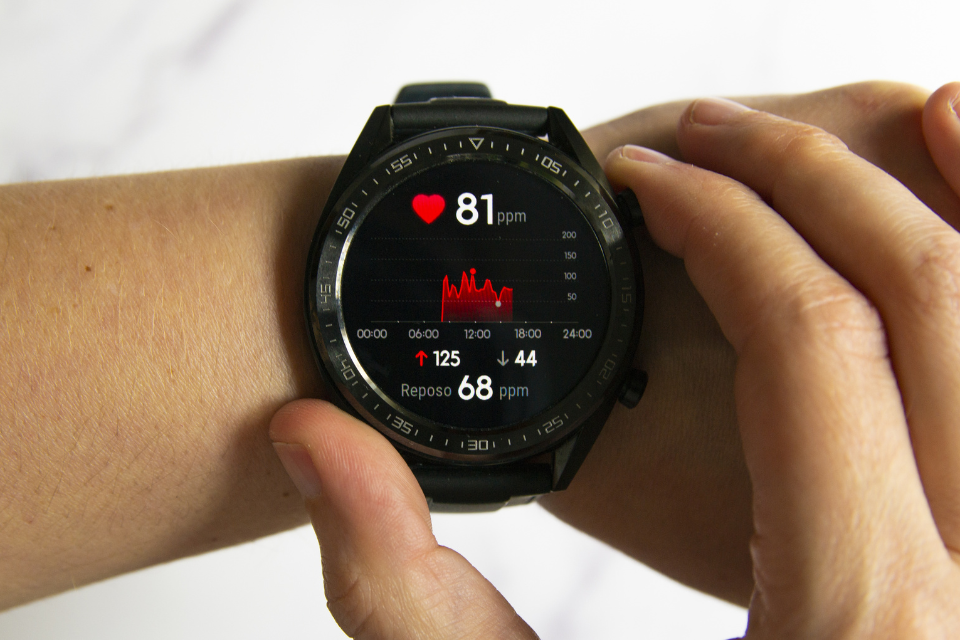
Contrary to what most people think, your heart does not beat like a metronome. Instead, when scanned with a sensitive device, small variations measured in milliseconds are picked up between one beat and the next.
You used to have to go into a doctor’s office and get an EKG in order to get a read on your HRV. But now, thanks to the evolution of wearable fitness trackers, you can get a daily or even hourly read on this critical metric. (Note: Accuracy varies depending on your device and other factors. My perspective on accuracy is that it’s probably not entirely accurate; however, it’s more information than I had before.
Your Autonomic Nervous System

First, let’s get on the same page with some medical terms. Your autonomic nervous system—which regulates “automatic” bodily functions such as breathing, blood flow, and digestion—has two parts: the parasympathetic (“rest and digest”) and sympathetic nervous systems (“fight or flight”).
Your parasympathetic nervous system is also referred to as “rest and digest.” These nerves relax your body and restore you to a more even state after periods of stress or exercise.
Your parasympathetic nervous system (ideally) balances your sympathetic nervous system—also referred to as “fight or flight.” According to Cleveland Clinic, “Your sympathetic nervous system carries signals that put your body’s systems on alert, and your parasympathetic carries signals that return those systems to their standard activity levels.”
Higher HRV indicates a better stress response
When your parasympathetic nervous system is in charge, there is more variability between beats of your heart—in other words, high heart rate variability.
Research shows that people who have more variability between beats are actually better able to respond to stress and bring their bodies back into homeostasis, which is the process through which living organisms keep their bodily systems in balance in response to internal or external stressors.
For example, when your body overheats, you perspire and this helps your body cool and maintain a steady internal temperature, bringing you back into homeostasis.
Lower HRV suggests greater fatigue
While a higher HRV generally indicates a relaxed state with a well-functioning autonomic nervous system, a lower HRV can suggest more stress, fatigue, or other health issues. However, a high HRV is not always a good thing, so it’s important to discuss your HRV with your doctor if you have concerns.
It’s generally believed that balance between your sympathetic and parasympathetic nervous systems is more positive than an imbalance.
What is the connection between HRV and attention management?

One way to understand if your nervous system is in balance is to monitor your HRV throughout the day. Constant distraction contributes to stress, which is more likely to correlate to a low HRV more often.
I define attention management as a collection of behaviors that you can more intentionally harness to produce the best results in a moment, and therefore achieve more of your most significant results. Rather than letting outside demands choose for us, attention management allows us to live a life of choice and intention rather than a life of reaction and distraction.
Therefore, a practice of attention management might help you balance your nervous system.
When you practice attention management, it can help you become more aware of your mental state and your physical state, and take steps to change each. Constant distraction promotes more distraction, and this can help keep us in “fight or flight” mode more often, which is likely to contribute to low HRV. Being less distracted throughout the day can lower your stress and, therefore, contribute to a higher HRV.
The Parasympathetic vs Sympathetic Nervous Systems

In our always-on environment, attention management skills can help us keep our parasympathetic nervous systems at the helm. We can resist distractions and focus on our most important tasks.
If you monitor your HRV, you can learn if your HRV is lower when you are practicing attention management, and higher when you are letting distractions rule your day. Personally, monitoring my own HRV has helped me feel more in charge of my mental and physical state throughout my days.
However, when we lack strong attention management skills, we are less adaptable to stressors. Our sympathetic nervous systems take control, throwing our bodies and minds out of whack. Too often, as distractions hijack our attention, we find ourselves being more reactive than proactive. Then, instead of achieving things that are important to us, we find ourselves focusing on tasks that are only important to others.
We can use attention management to help us relax, get energized, or put us in a state of deep contemplation. Once we are in a particular mind-state, it becomes easier to achieve a specific goal, whether we simply want to feel refreshed, or we need to come up with a new product plan under a tight deadline.
How To Build Resilience With Attention Management

Attention management involves deliberately matching your brain state to your experience in any moment to achieve the best results at any given time. By mastering attention management, you can:
- Determine which quadrant is most beneficial for specific situations
- Identify the quadrant you are in at any moment
- Deliberately transition into the most suitable quadrant throughout the day based on what you’re trying to achieve
The concept of four quadrants of attention management is built on the level of control we exercise over our attention. Each quadrant offers insight into your attention’s state resulting from that effort. For more in-depth discussion, refer to my book Attention Management: How to Create Success and Gain Productivity—Every Day.
As you increase your attention management skills and spend more time in the “focused and mindful,” “daydreaming,” and “flow” quadrants, you can compare your HRV in those states, and see if your daily average HRV decreased over time. Let attention management and a fitness tracker that monitors HRV be two “tools in your toolbox” to empower your well-being.